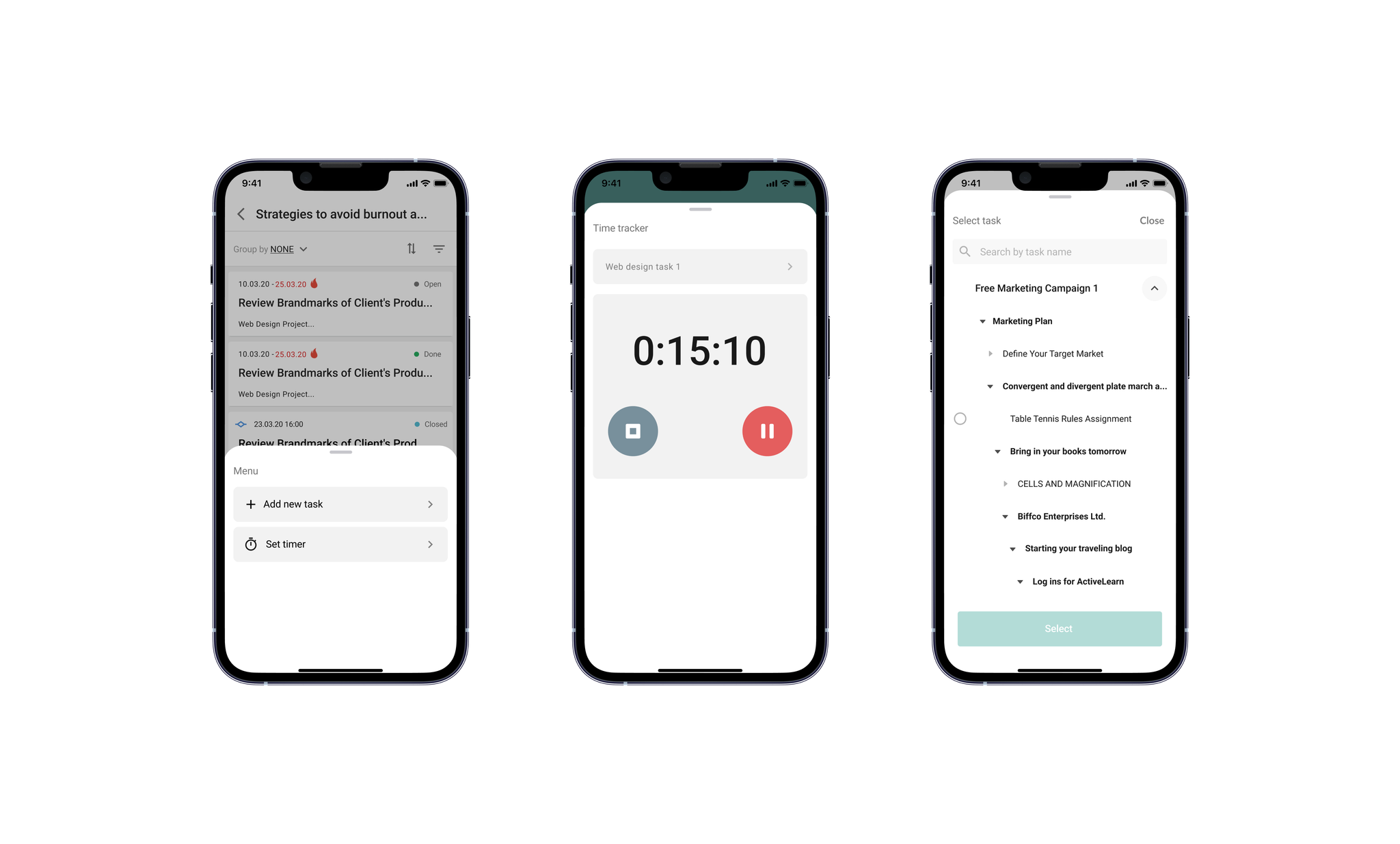
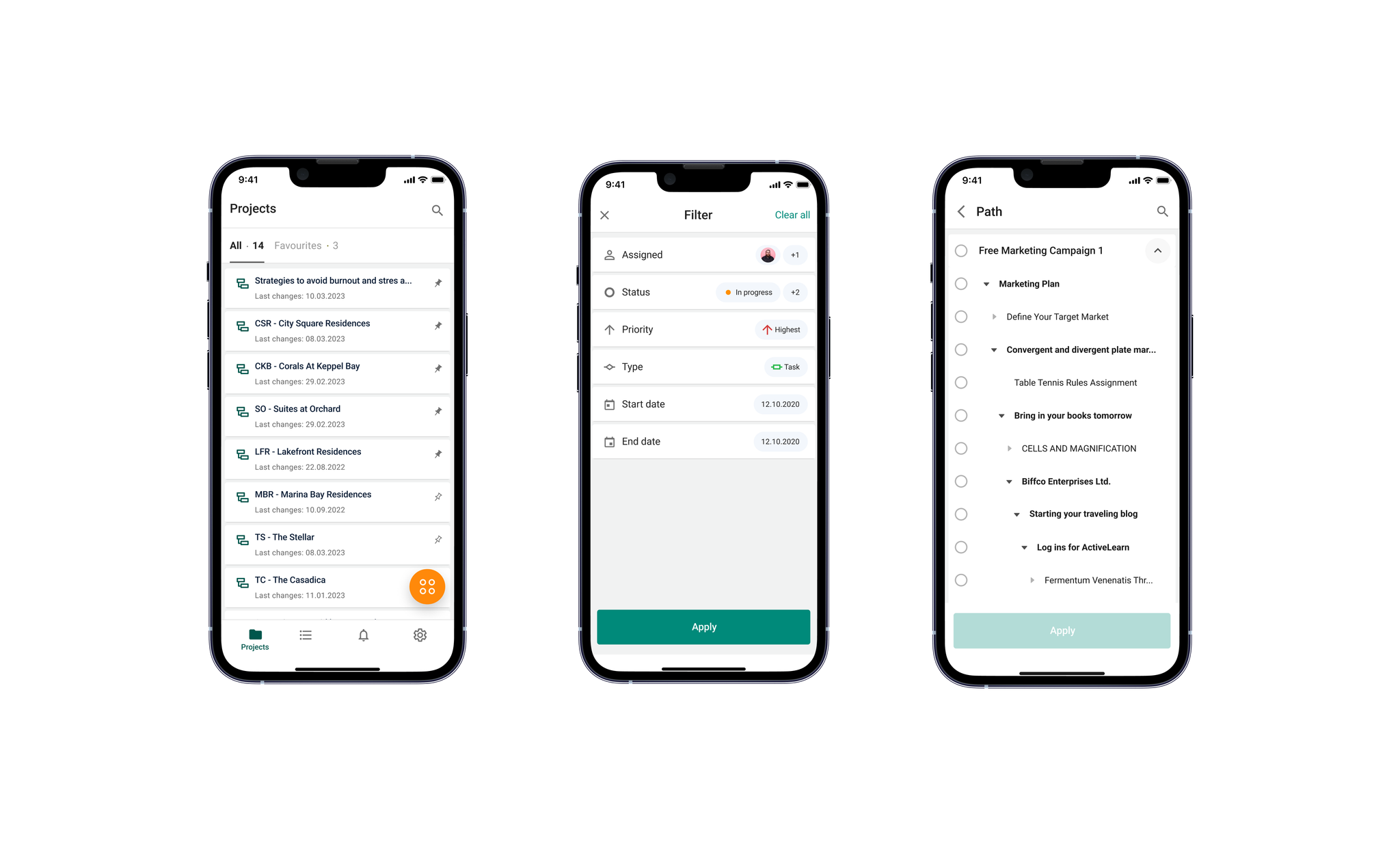
Mobile parity without mobile overload
GanttPRO's original mobile app was a scaled-down port of the desktop interface — visually and technically. It had critical gaps: no deletion confirmation dialogs, no feedback for download states, errors with no recovery path. It was the product's weakest surface, but for 800,000 registered teams, mobile access wasn't optional.
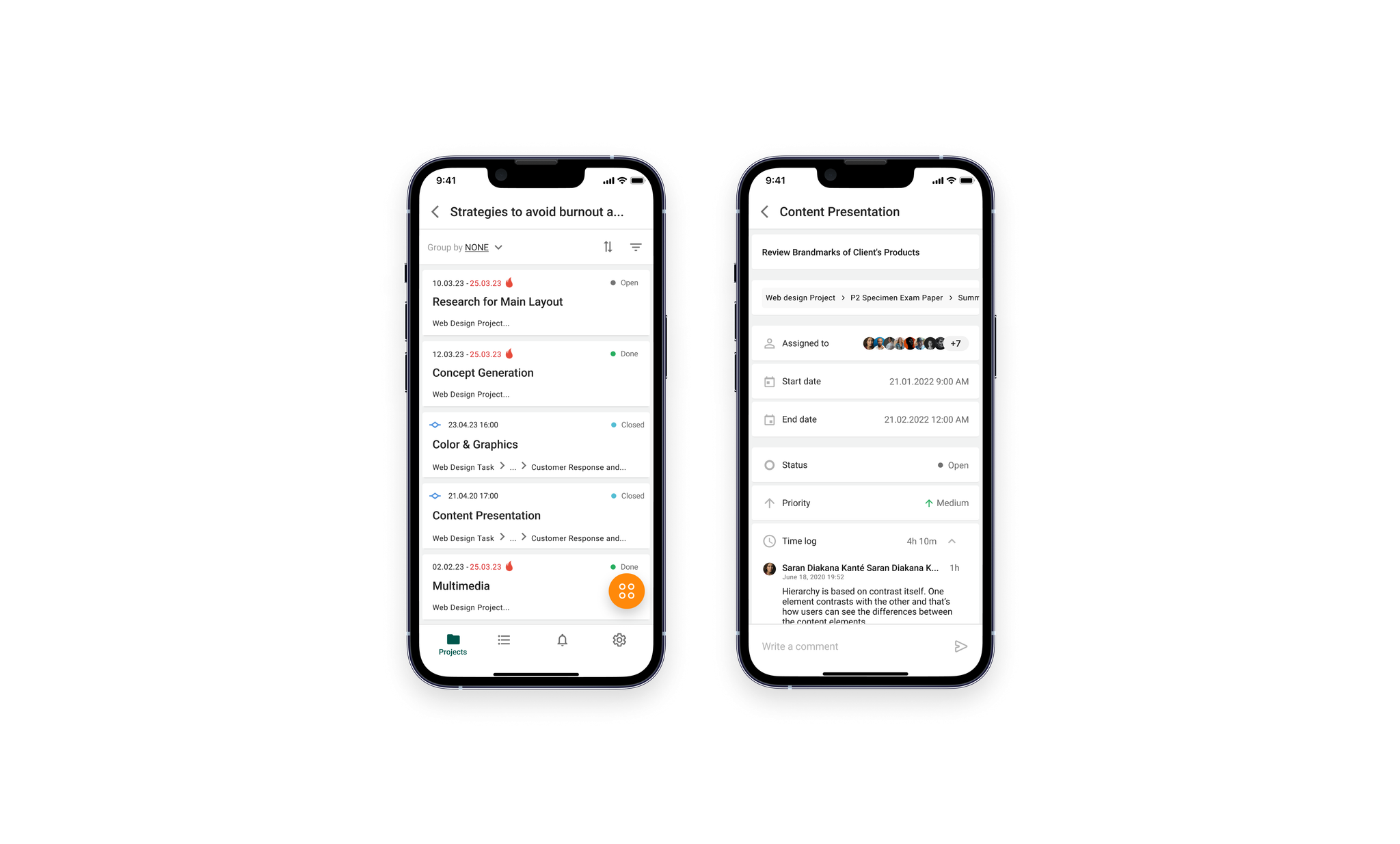
As part of the broader Global Redesign, I designed the mobile app from the ground up as sole designer — one cross-platform app for iOS and Android, built with a touch-first mental model, rebuilding every major flow for mobile constraints and expectations.
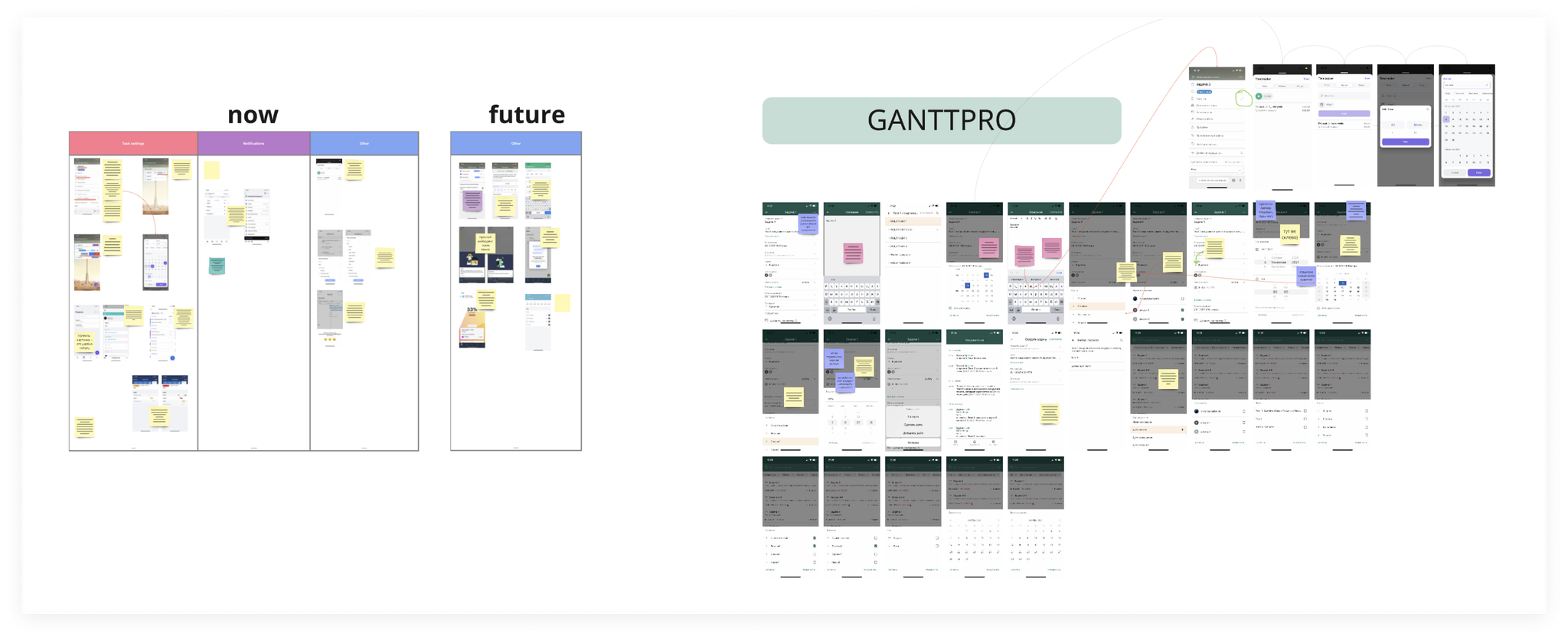
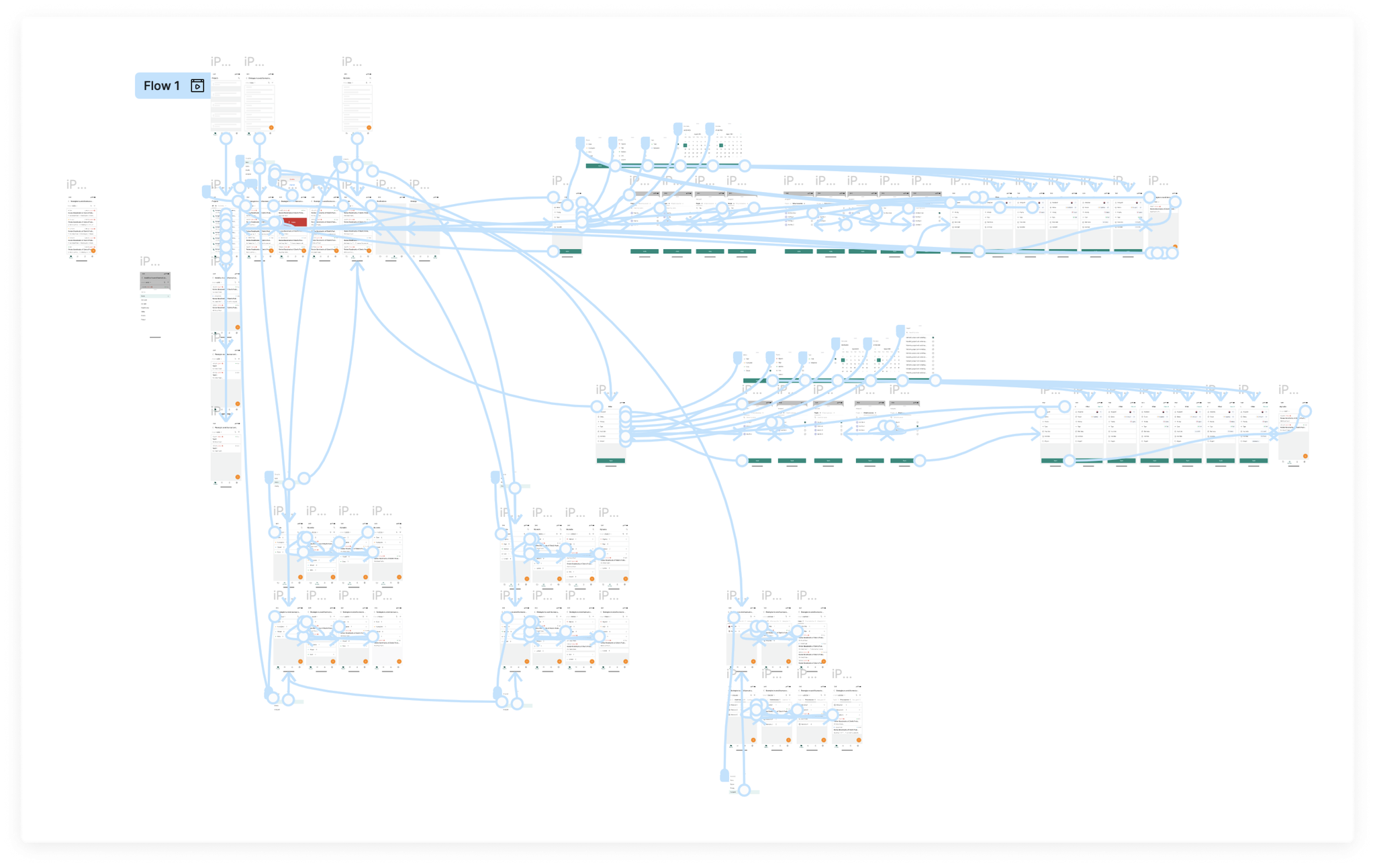
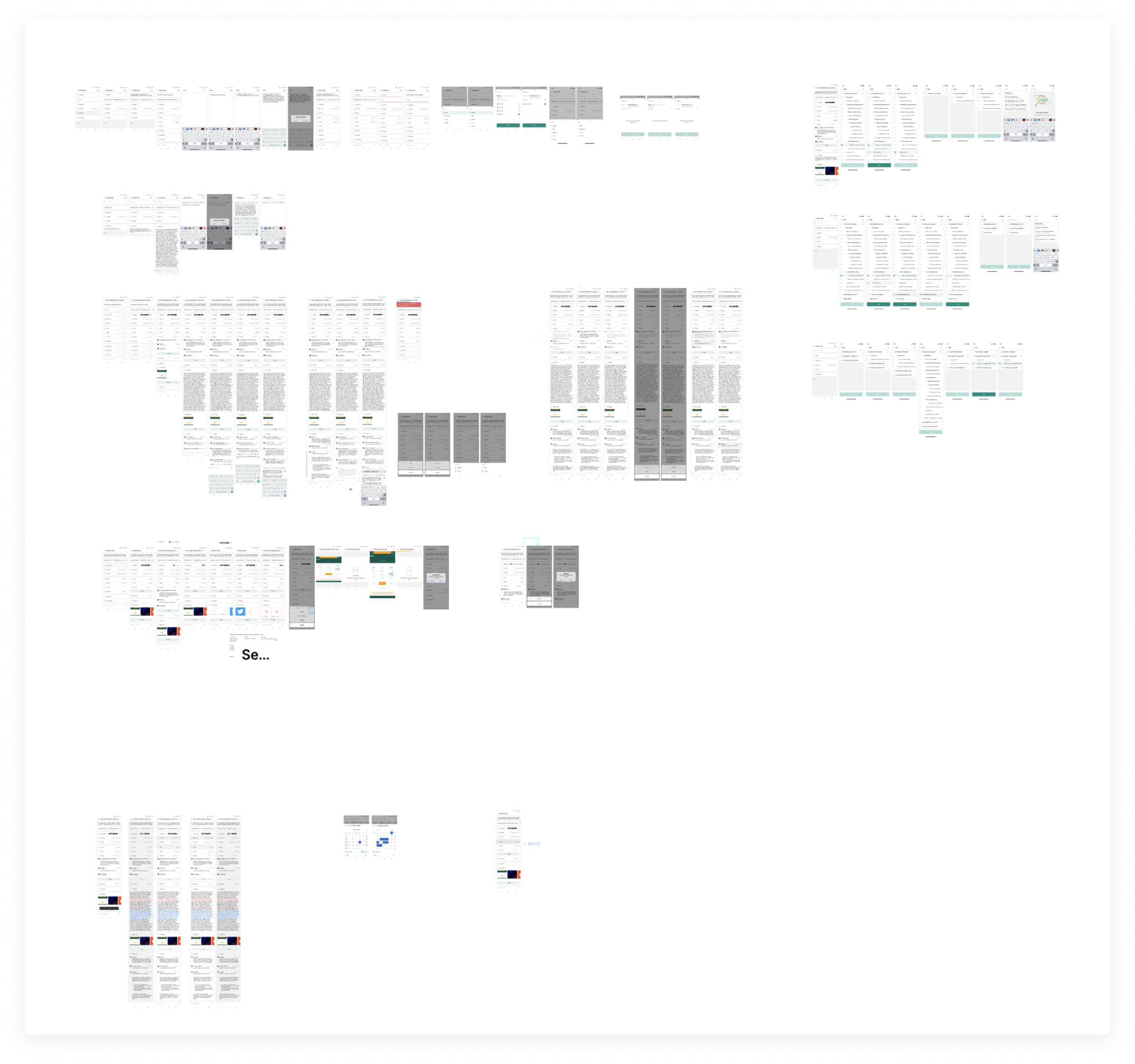
40+ edge cases before a single line of code
Collected feedback from existing mobile users through in-app surveys and 6 user interviews. The top frustrations: can't find tasks quickly, accidental deletions with no undo, and no way to tell if an action succeeded.
Rebuilt the bottom navigation around the four most-used flows: My Tasks, Project View, Notifications, and Settings. Removed 3 navigation layers that had existed in the original app.
Designed the complete interaction system for task management: swipe actions, long-press menus, pull-to-refresh, and haptic feedback triggers. As a cross-platform app, each interaction was designed once to feel natural on both iOS and Android.
Before handoff, documented 40+ edge cases covering empty states, error states, offline behavior, permission-restricted views, and concurrent edit scenarios. This prevented the gaps that had made the original app unreliable.
The first mobile product GanttPRO was proud of
The redesigned mobile app shipped as part of the 2023 platform update. User satisfaction scores for mobile improved significantly post-launch. The design system built for mobile — components, interaction patterns, spacing tokens — became the standard for all subsequent mobile feature development at GanttPRO.